My Journey
From Yoga to Teaching
I discovered yoga in 2004. What began as a personal practice gradually became an important part of my life, eventually taking me to India in 2010 to complete my yoga teacher training.

I have been teaching since 2011, working with people of different ages, backgrounds and abilities. These years of teaching have naturally enriched my experience, but above all they have kept my curiosity alive: understanding how we move, why certain physical abilities develop or decline, and how a practice can evolve with our needs and as we age.
Yoga has remained the common thread throughout this journey, but the way I practice and teach has never stopped evolving.
Getting Stronger
At a certain point in this journey, I felt the need to give strength training a more important place in my practice.
I started with a fairly traditional approach, close to powerlifting, based in particular on the StrongLifts 5×5 programme and the major compound lifts: squats, deadlifts, bench presses, overhead presses and similar movements.
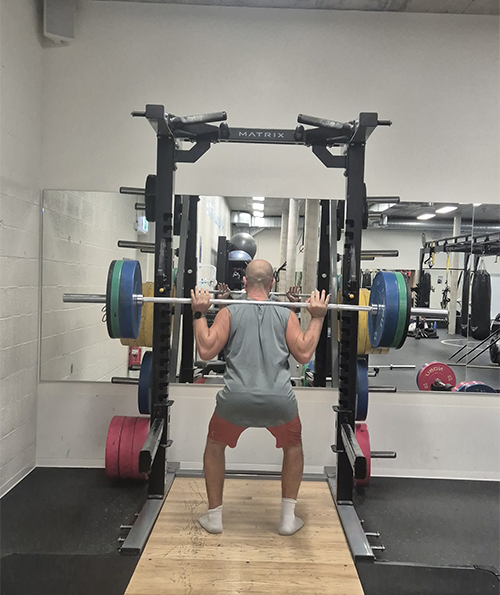
The benefits were obvious. I became stronger, developed and maintained muscle mass, and regained physical capacities that yoga alone challenged in different ways.
But the same curiosity that had led me first to yoga and then to strength training eventually led me to another question:
Is being stronger enough to move better?
Lifting heavier weights is a valuable ability. But how could I teach my body to use that strength in a wider variety of situations? How could I push, pull, carry, crawl, get up from the ground, rotate, run, jump, or simply control my own body in space?
Those questions led me to explore active mobility, calisthenics, isometric training and natural movement in greater depth.
Moving for the Long Term
My growing interest in longevity encouraged me to broaden this exploration even further.
Healthy ageing is not simply about maintaining flexibility or strength. We also need to preserve balance, coordination, power, speed and our ability to react quickly.
This led me to gradually reintroduce sprinting, jumping, plyometrics and athletic training into my own practice.
This exploration also made me increasingly aware of the importance of preventive work: observing how the body moves, identifying limitations and weak points, and then specifically developing the mobility, stability, control and strength needed to address them.
The goal is not to build a “perfect” body, but a body that retains its ability to adapt for as long as possible.
My Practice Today
I still train in the gym and practise the main compound lifts, because I remain convinced of the importance of developing and maintaining strength.
But my practice today is much more varied.
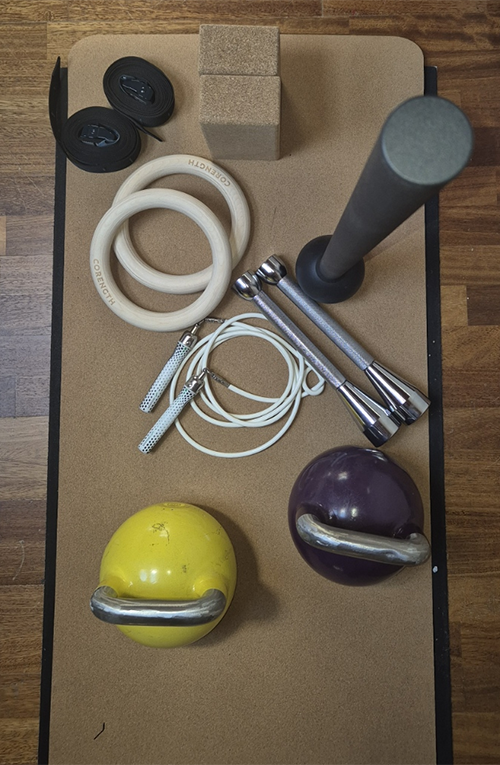
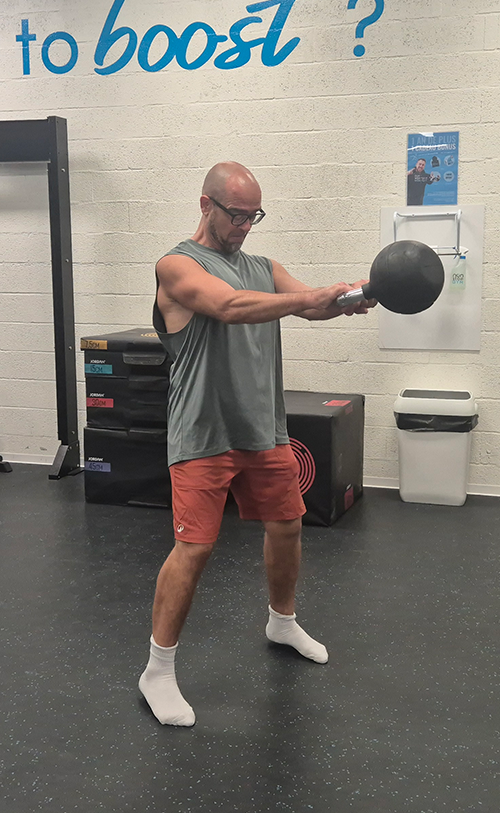
Depending on the period and what I need, it may include yoga, calisthenics, mobility work, isometric exercises, natural movement, kettlebells, Indian clubs, macebell training, jump rope and athletic work, particularly sprinting.
Breathing is also becoming an increasingly important part of this exploration. I am currently training in the Oxygen Advantage method to deepen my understanding of breathing and progressively integrate this knowledge into my own practice and teaching.
I do not consider any of these tools to be a universal answer. Each offers something different. What interests me is understanding when and why to use it.
Is It Still Yoga?
All these explorations have ultimately brought me back to yoga — but with a different perspective.
Yoga remains at the heart of my journey, and I have a deep respect for its tradition. It is precisely this respect that now makes me question how I should define what I teach.
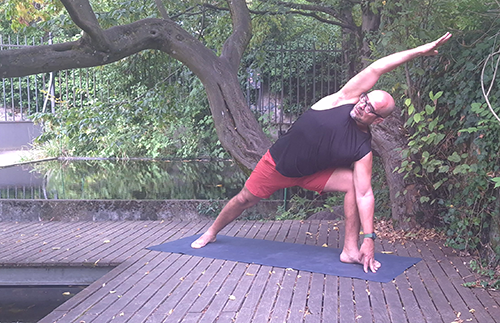
When we integrate active mobility, isometric training, natural movement, calisthenics, strength development, breathing and elements of athletic preparation into yoga, can we still simply call it yoga?
I would rather not stretch the meaning of the word yoga to artificially include everything I want to teach.
What is gradually emerging instead is the idea of a broader practice: inspired by yoga, but not limited to yoga.
An approach in which different movement traditions can meet modern knowledge about strength, mobility, breathing and longevity.
Not to create something new simply for the sake of novelty, nor to claim that I have invented a new method, but to keep looking for answers to a question that I find far more interesting:
What does our body really need to remain strong, mobile and capable throughout life?
Continuing to Learn
I see this approach as an ongoing journey rather than a finished method.
Following my Oxygen Advantage training, I intend to continue my education in the fields of physical training, movement and kettlebell training.
In the field of strength, StrongFirst remains one of my important references, not only for its technical approach but also for a philosophy of strength that resonates with me: strength is not an end in itself, but a capacity that makes many other things possible.
I want to continue learning from different schools and approaches, testing what I learn through my own practice and teaching experience, and keeping what proves genuinely useful.
So I am not searching for the method.
I am searching for principles and tools that can help us build and preserve a body that is strong, mobile, coordinated and adaptable.
A body capable of moving with confidence today — and of continuing to do so for as long as possible.